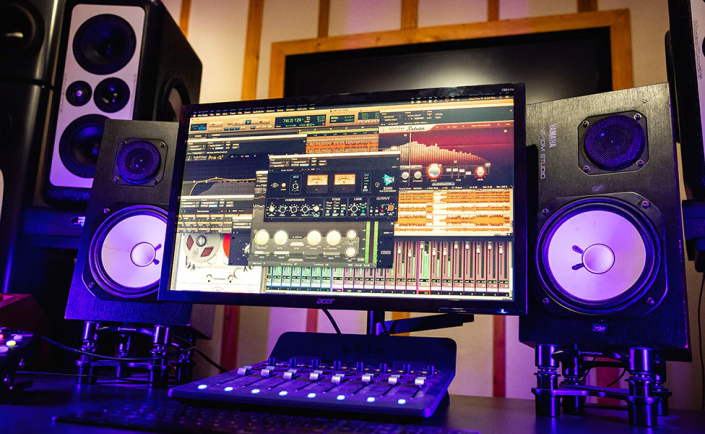
DAW - Digital Audio Workstation. A computer with the necessary Hardware and Software to digitize audio for recording, playback and editing.
Music Song Tracks and data can then be stored in a DAW for editing, or sent to a digital recorder.
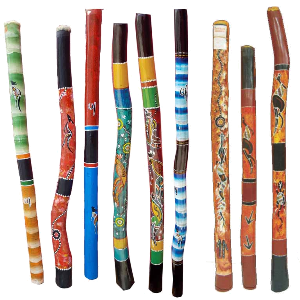
Didgeridoo - The Didgeridoo, also spelt didjeridu among other variants, is a wind instrument, played with vibrating lips to produce a continuous drone while using a special breathing technique called Circular Breathing. The Didgeridoo was developed by Aboriginal peoples of northern Australia at least 1,000 years ago and is now in use around the world, though still most strongly associated with Indigenous Australian music. A Didgeridoo is usually cylindrical or conical, and can measure anywhere from 1 to 3 m (3 to 10 ft) long. Most are around 1.2 m (4 ft) long. Generally, the longer the instrument the lower its pitch. Flared instruments play a higher pitch than unflared instruments of the same length.
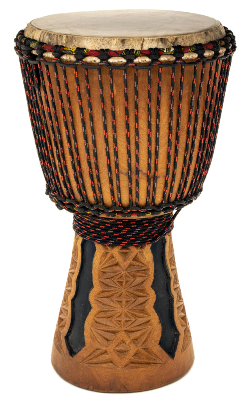
Djembe - A Djembe or jembe is a rope-tuned, skin-covered goblet drum played with bare hands from the Sabar family, originally from Senegal that is widely used in West Africa. The djembe has a body (or shell) carved of hardwood and a drumhead made of untreated (not limed) rawhide, most commonly made from goatskin. Excluding rings, Djembes have an exterior diameter of 30–38 cm (12–15 in) and a height of 58–63 cm (23–25 in). The majority have a diameter in the 13 to 14 inch range. The weight of a djembe ranges from 5 kg to 13 kg (11–29 lbs) and depends on size and shell material. .
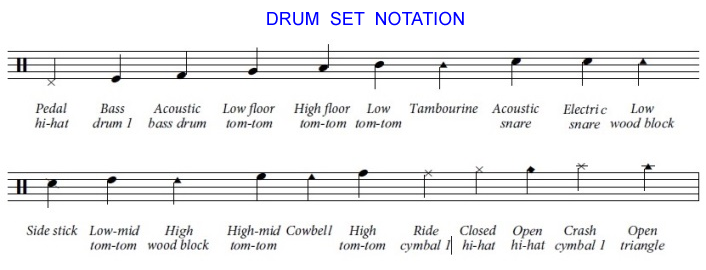
Drum set - A Drum Set, acoustic drum kit, also known as a trap set or simply Drums in popular music and jazz contexts, is a musical instrument consisting of a collection of percussion instruments arranged to be played by a single musician. It typically includes Drums, Cymbals, and sometimes other auxiliary percussion instruments, such as a Tambourine or a Cowbell. The Drummer usually plays while seated on a drum throne, using drumsticks or special wire or nylon brushes to strike the drums and cymbals, as well as pedals to operate the bass drum and hi-hat, allowing them to adapt the sound to their desired effect.

Drum bass - The Bass Drum is a large drum that produces a note of low definite or indefinite pitch. The instrument is typically cylindrical, with the drum's diameter usually greater than its depth, with a struck head at both ends of the cylinder. The heads may be made of calfskin or plastic and there is normally a means of adjusting the tension with threaded taps. Bass drums are percussion instruments that vary in size and are used in several musical genres. The Kick drum, a term for a Bass drum associated with a Drum Set, is struck with a beater attached to a foot pedal, also called a Bass or Kick pedal.

Drum snare - The snare drum (or side drum) is a percussion instrument that produces a sharp staccato sound when the head is struck with a drum stick, due to the use of a series of stiff wires held under tension against the lower skin. Snare drums are often used in orchestras, concert bands, marching bands, parades, drumlines, drum corps, and more. It is one of the central pieces in a drum set, a collection of percussion instruments designed to be played by a seated drummer and used in many genres of music. Snare drums are usually played with drum sticks, but other beaters such as the brush or the rute can be used to achieve different tones. The snare drum is a versatile and expressive percussion instrument due to its sensitivity and responsiveness. The sensitivity of the snare drum allows it to respond audibly to the softest strokes, even with a wire brush. It can be used for complex rhythmic patterns and engaging solos at moderate volumes. Its high dynamic range allows the player to produce powerful accents with vigorous strokes and a loud metallic click when rimshots are used.

Drum Tom - A Tom drum (also known as a Tom-tom) is a cylindrical drum with no snares, named from the Anglo-Indian and Sinhala language. It was added to the drum kit in the early part of the 20th century. Most Toms range in size between 15 and 50 centimetres (6 and 20 inches) in diameter, though floor toms can go as large as 60 centimetres (24 inches).
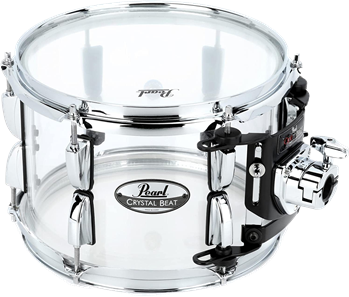
Drum Floor Tom - A floor tom is a large double-headed tom-tom drum which usually stands on the floor on 3 legs. However, they can also be attached to a cymbal stand with a drum clamp, or supported by a rim mount. It is a cylindrical drum without snare wires, and tend to produce a booming, resonant sound which can vary in pitch.

Drum rototom - The Rototom is a shell-less drum that is able to change pitch by rotating its drumhead around a threaded metal ring. Unlike many types of drums, Rototoms are designed to have a variable definite pitch leading composers to write specific notes for them as pitched percussion instruments. They are also often used to extend the tom range of a standard drum kit. Rototoms can be tuned quickly by rotating the drumhead, which sits in a threaded metal ring. Rotation raises or lowers the tension hoop relative to the rim, which increases or decreases the pitch of the drum by increasing or decreasing the tension of the drumhead. Drum company Remo has historically offered rototoms in seven diameters: 6 inches (15 cm), 8 inches (20 cm), 10 inches (25 cm), 12 inches (30 cm), 14 inches (36 cm), 16 inches (41 cm), and 18 inches (46 cm). However, as of 2023, Remo only offers rototoms ranging from a 6 to 10 inch diameter as part of a set that includes a mounting rail and stand. All other sizes have been discontinued.

Drum octaban - Octobans, also known as tube toms, are deep, small diameter, single-head tom-toms. Octobans were originally grouped in melodically tuned sets of eight, hence the name, in reference to octave and from octo meaning "eight". Part sets of two or four drums or an individual drum or octo are common additions to a drum kit. Complete and half sets of octobans are commonly mounted in clusters of four, in a square pattern. Mounts for four drums in a straight line, dual mounts for two drums, and individual mounts are all also common.

Drum cymbals - Cymbals including the Ride, Crash, Splash, China and HiHats are listed in order with individual details/photos in SECTION C.
Drum sticks - The term Drum Stick(s) is applied to a wide range of Drum beaters, Mallets, Brushes.
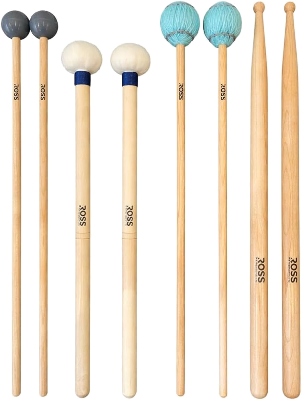
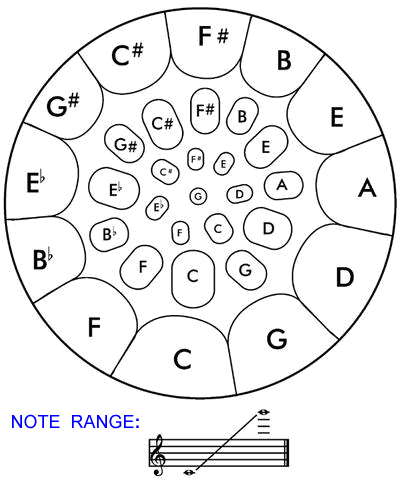
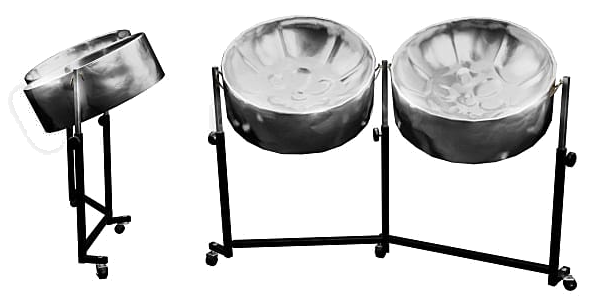
Drum steel - The Steel Drum, also known as a pan or steelpan is a musical instrument originating in Trinidad and Tobago. The modern pan is a chromatically pitched percussion instrument made from 200-litre industrial drums. Drum refers to the steel drum containers from which the pans are made. A pan is played using a pair of straight sticks tipped with rubber; the size and type of rubber tip varies according to the class of pan being played. Some musicians use 4 pansticks, holding 2 in each hand. Steelpan musicians are called pannists. Note Range is A1 - G6.
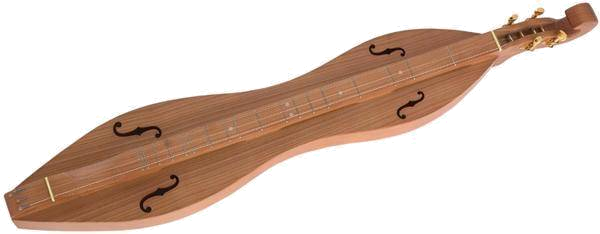
Dulcimer appalchian - The Appalachian Dulcimer is a fretted string instrument of the zither family, typically with 3 or 4 strings, originally played in the Appalachian region of the United States and has many variant names. Most often it is simply called a Dulcimer (also rendered as "dulcimore", "dulcymore", "delcimer", "delcimore", etc.).
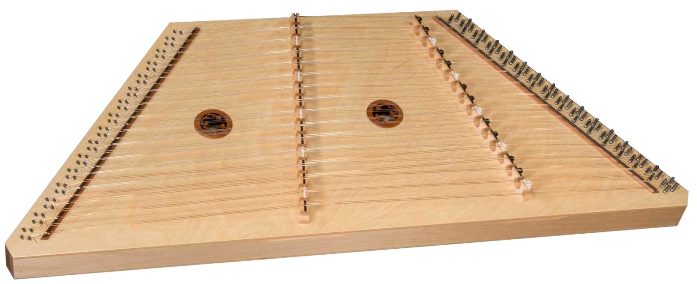
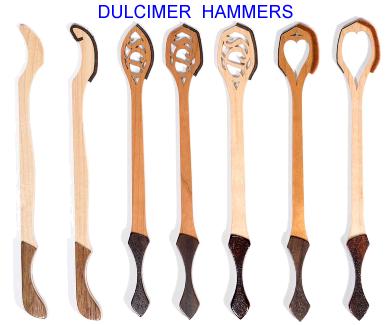
Dulcimer hammered - The Hammered Dulcimer (also called the Hammer Dulcimer), is a percussion-string instrument, which consists of strings typically stretched over a trapezoidal resonant sound board. The Hammered Dulcimer is set before the musician, who in more traditional styles may sit cross-legged on the floor, or in a more modern style may stand or sit at a wooden support with legs. The player holds a small spoon-shaped mallet or hammer in each hand to strike the strings.
|