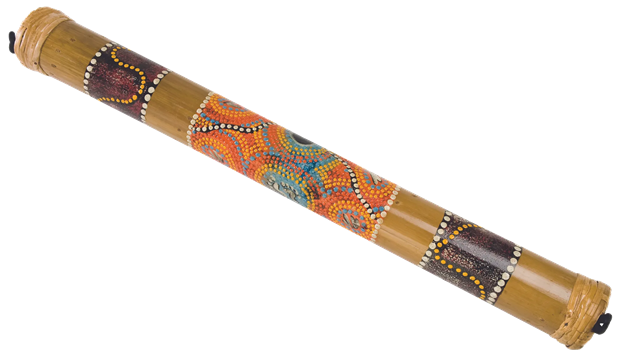
Rainstick - A Rainstick is a long, hollow tube of bamboo or dried cactus that is partially flooded with small pebbles, rice, dried beans, or other hard granular matter. The inside surface of the tube has small pins or thorns arranged helically. When the stick is rotated and held upright, the pebbles fall to the other end of the tube, bouncing off the internal protrusions to create a sound reminiscent of falling rain.
Recorder - The Recorder is a family of woodwind musical instruments and a member of the family of duct flutes that includes tin whistles and flageolets. It is the most prominent duct flute in the western classical tradition. A recorder can be distinguished from other duct flutes by the presence of a thumb-hole for the upper hand and holes for 7 fingers: 3 for the upper hand and 4 for the lower. Recorders are made in various sizes and ranges. The sizes most commonly in use today are the soprano (also known as descant, lowest note C5, alto (also known as treble, lowest note F4), tenor (lowest note C4), and bass (lowest note F3). Recorders were traditionally constructed from wood or ivory. Modern professional instruments are wooden, often boxwood; student and scholastic recorders are commonly made of moulded plastic


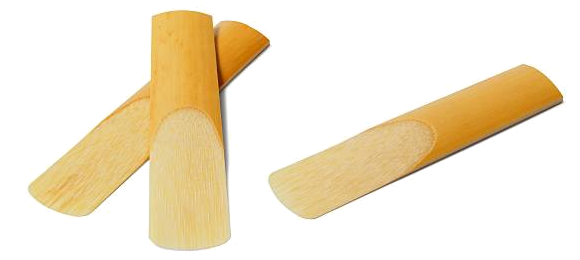
Reed - A Reed (or lamella) is a thin strip of material that vibrates to produce a sound on a musical instrument. Most woodwind instrument Reeds are made from Arundo donax ("Giant cane") or synthetic material. Single reeds are used on the mouthpieces of clarinets and saxophones. They are roughly rectangular, with a tip that is rounded to match the shape of the mouthpiece. The back of the reed is flat to sit flat on the mouthpiece table, and the reed's thickness tapers to a thin tip. All single reeds are shaped similarly but vary in size to fit each instrument's mouthpiece. Reeds designed for the same instrument look roughly identical but vary in thickness ("hardness" or "strength"). Hardness is generally measured on a scale of 1 through 5 from softest to hardest. This is not a standardized scale and reed strengths vary by manufacturer. The thickness of the tip and heel, as well as the profile in between, affect the sound and playability. Pieces of cane that differ in stiffness will respond differently even if cut with the same profile.
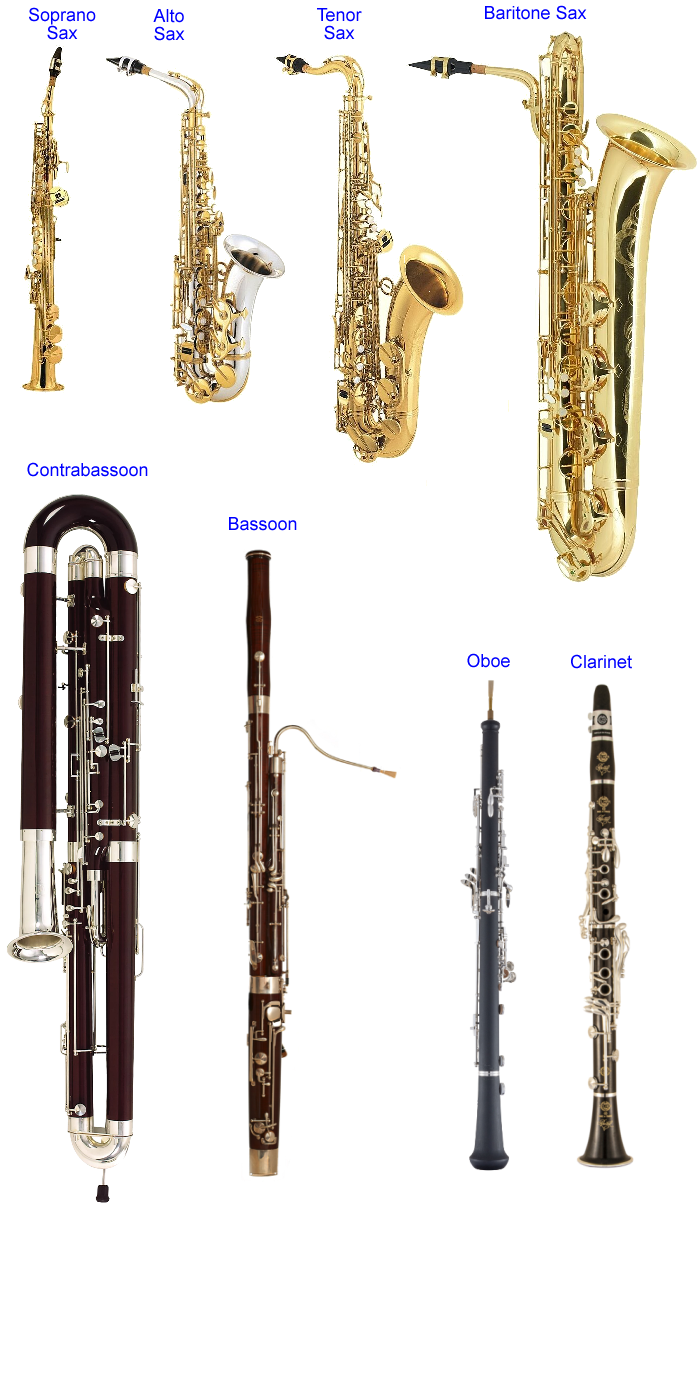
Reed instrument - Musical instruments that use reeds are members of the woodwind family, because many years ago the instruments were all made of wood. Today the instruments can be made of metal (brass, silver, gold), wood, or a hard plastic made to look like wood.
|