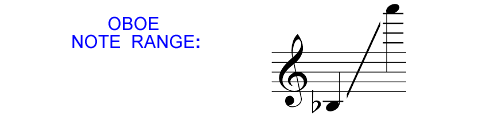
Oboe - The Oboe is a type of double-reed woodwind instrument. Oboes are usually made of wood but may also be made of synthetic materials, such as plastic, resin, or hybrid composites. The most common type of Oboe, the soprano oboe pitched in C, measures roughly 65 cm (25+1/2 in) long and has metal keys, a conical bore and a flared bell. Sound is produced by blowing into the reed at a sufficient air pressure, causing it to vibrate with the air column.[1] The distinctive tone is versatile and has been described as "bright". Today, the Oboe is commonly used as orchestral or solo instrument in symphony orchestras, concert bands and chamber ensembles.

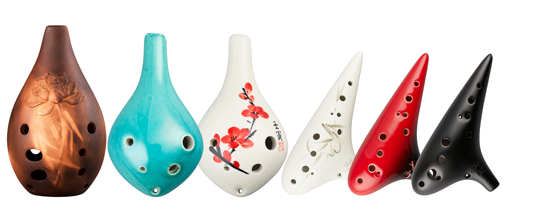
Ocarina - The Ocarina, also known as a Potato Flute is a wind musical instrument and a type of vessel flute. Variations exist, but a typical Ocarina is an enclosed space with 4 to 12 finger holes and a mouthpiece that projects from the body. It is traditionally made from clay or ceramic, but other materials are also used, such as plastic, wood, glass, metal, or bone. The Italian Ocarina was invented in 1853 by 17-year-old Giuseppe Donati, who also gave it the name Ocarina. Donati handmade each Ocarina from clay, with anything from 7 to 10 finger-holes and a spout for a mouthpiece.
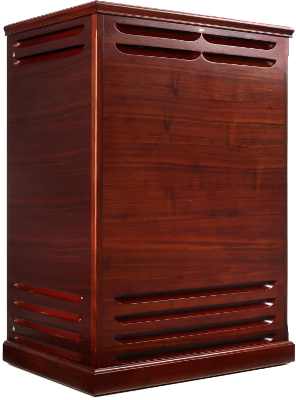
Organ Electronic - An Electric Organ is an electronic keyboard instrument which was derived from the Harmonium, Pipe Organ and Theatre Organ. Originally designed to imitate their sound, or orchestral sounds, it has since developed into several types of instrument. The most common Electronic organ is the Hammond B3 Organ, which requires a separate Leslie Speaker Cabinet (shown below) with rotating Speakers and Horn that can be sped up or slowed down. Used by Rock, Blues, Jazz and other bands, typcially with the detachable Bass Pedals removed.

Organ Leslie - The Leslie speaker is a combined amplifier and loudspeaker that modifies the sound of an electric musical instrument by rotating a baffle chamber (drum) in front of the loudspeaker. A similar effect is provided by a rotating system of horns in front of the treble driver. It is most commonly associated with the Hammond organ, though it was later used for the electric guitar and other instruments. A typical Leslie speaker contains an amplifier, a treble horn and a bass speaker—though specific components depend upon the model. Some models have two speed settings, known as chorale and tremolo. .
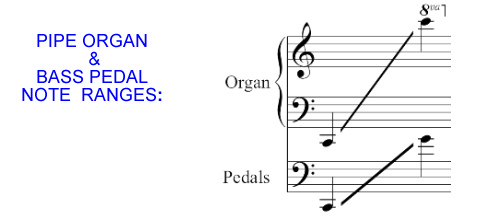
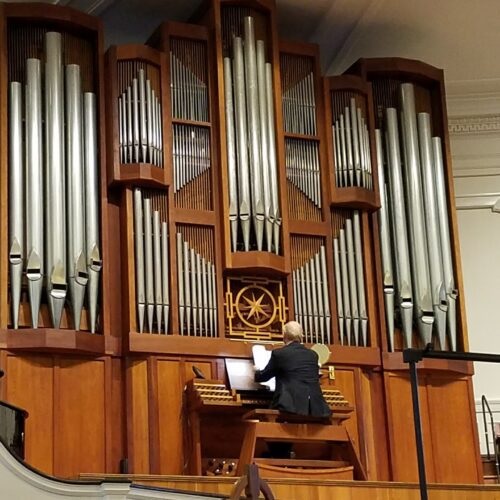
Organ Pipe - The Pipe Organ is a musical instrument that produces sound by driving pressurised air through the organ pipes selected from a keyboard. Because each pipe produces a single tone and pitch, the pipes are provided in sets called ranks, each of which has a common timbre, loudness and construction throughout the keyboard compass. A rank is a set of pipes all having the same tonal quality, but having a range of different pitches. Most organs have many ranks of pipes of differing pitch, timbre, and volume that the player can employ singly or in combination through the use of controls called stops. A pipe organ has one or more keyboards (called manuals) played by the hands, and most have a pedalboard played by the feet; each keyboard controls its own division (group of stops). The keyboard(s), pedalboard, and stops are housed in the organ's console. The organ's continuous supply of wind allows it to sustain notes for as long as the corresponding keys are pressed, unlike the piano and harpsichord whose sound begins to dissipate immediately after a key is depressed.
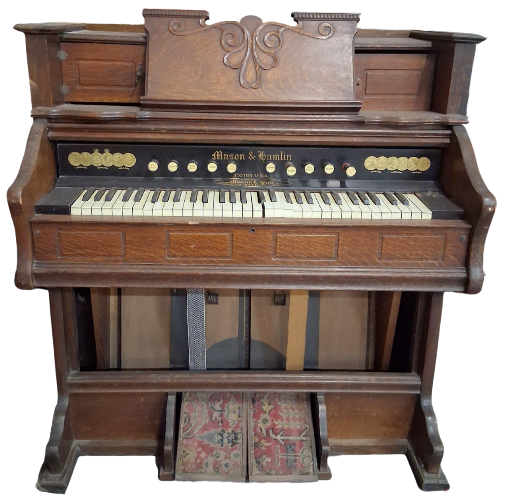
Organ Pump - The Pump Organ or Reed organ is a type of organ that uses free reeds to generate sound, with air passing over vibrating thin metal strips mounted in a frame. The pedals are pressed using the feet to pump air into the organ. More portable than Pipe organs, Pump organs became widespread in smaller churches and private homes during the 19th century, although their volume and tonal range were limited. They generally featured 1 or occasionally 2 manuals, while pedal-boards were rare. Higher-end pump organs offered a broader range of tones, and models intended for churches or affluent households were often housed in finely crafted cabinets.
|