Sampler - A Sampler is an electronic musical instrument that records and plays back samples (portions of sound recordings). Samples may comprise elements such as rhythm, melody, speech, sound effects or longer portions of music. Samples may be loaded or recorded by the user or by a manufacturer. The samples can be played back by means of the sampler program itself, a MIDI keyboard, sequencer or another triggering device (e.g., electronic drums). Because these samples are usually stored in digital memory, the information can be quickly accessed. A single sample may be pitch-shifted to different pitches to produce musical scales and chords. Samplers often offer filters, effects units, modulation via low frequency oscillation and other synthesizer-like processes that allow the original sound to be modified in many different ways. Most samplers have Multitimbrality capabilities in that they can play back different sounds simultaneously. Many are also polyphonic meaning they are able to play more than 1 note at the same time.
Keyboard Samplers since the 1980's have both a Microphone input and a Multi-track Recorder, typically at least 8 Tracks of sound.

Saxophone - The Saxophone (Sax) is a type of single-reed woodwind instrument with a conical body, usually made of brass. As with all single-reed instruments, sound is produced when a reed on a mouthpiece vibrates to produce a sound wave inside the instrument's body. The pitch is controlled by opening and closing holes in the body to change the effective length of the tube. The holes are closed by leather pads attached to keys operated by the player. Saxophones are made in various sizes and are almost always treated as transposing instruments. A person who plays the saxophone is called a saxophonist or saxist.
The saxophone was invented by the Belgian instrument maker Adolphe Sax in the early 1840's and was patented on 28 June 1846. Sax invented two groups of seven instruments each—one group contained instruments in C and F, and the other group contained instruments in Bb and Eb. The Bb and Eb instruments soon became dominant and most saxophones encountered today are from this series.
The 4 types of Saxophone are Soprano, Alto, Tenor and Baritone as compared below:
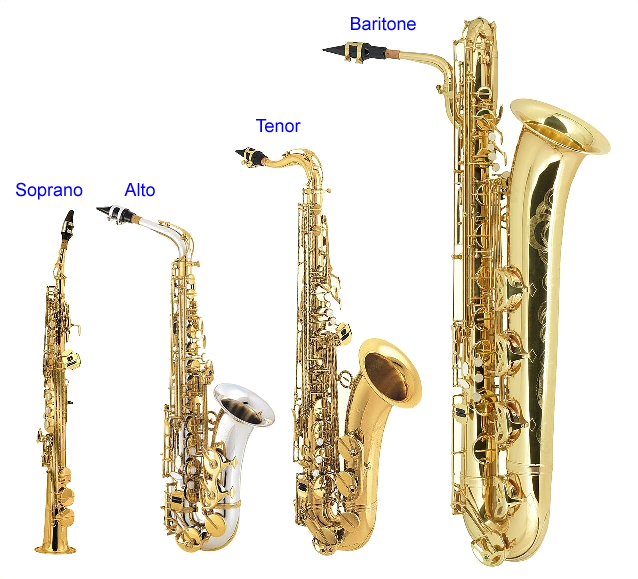
Saxophone soprano - The Soprano Saxophone is a small, high-pitched member of the saxophone family of woodwind instruments. A transposing instrument pitched in the key of Bb, the modern soprano saxophone with a high F# key has a range from concert Ab3 to E6 (written low Bb to high F?) and is therefore pitched 1 octave above the Tenor saxophone. There is also a Soprano saxophone pitched in C, which is uncommon as most were produced in America in the 1920s.


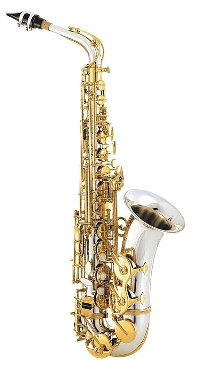
Saxophone alto - The Alto Saxophone is pitched in the key of Eb, smaller than the Bb Tenor but larger than the Bb Soprano. It is the most common Saxophone and is used in popular music, concert bands, chamber music, solo repertoire, military bands, marching bands and jazz .

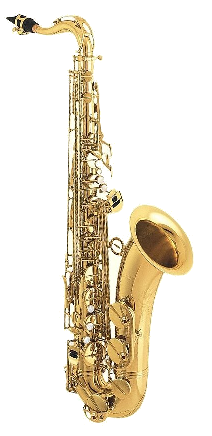
Saxophone tenor - The Tenor and the Alto are the two most commonly used Saxophones. The Tenor is pitched in the key of Bb (while the alto is pitched in the key of Eb) both are transposing instruments in the Treble Clef, sounding 1 Octave and a Major 2nd lower than the written pitch. Modern tenor saxophones, which have a high F# key have a range from Ab2 to E5 (concert) and are pitched 1 Octave below the Soprano saxophone.

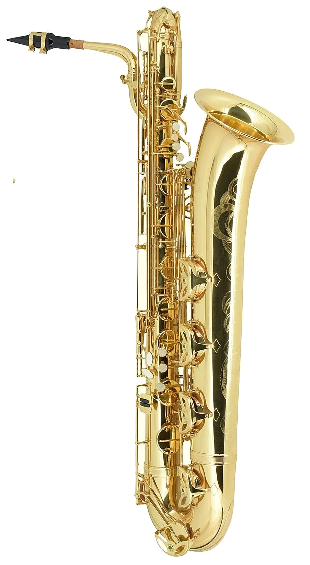
Saxophone baritone - The Baritone Sax is the lowest-pitched Saxophone in common use. Baritone saxophones are typically found in two versions with one ranging to low A and the other to low Bb. A Baritone saxophone weighs 11 to 20 pounds or 5.0 to 9.1 kilograms, depending on the material and design, making it substantially heavier than a Tenor saxophone.
It is a transposing instrument in the key of Eb, pitched an octave plus 1 Major 6th lower than written. It is 1 octave lower than the Alto saxophone. Modern baritones with a low A key and high F# key have a range from C2 to A4.

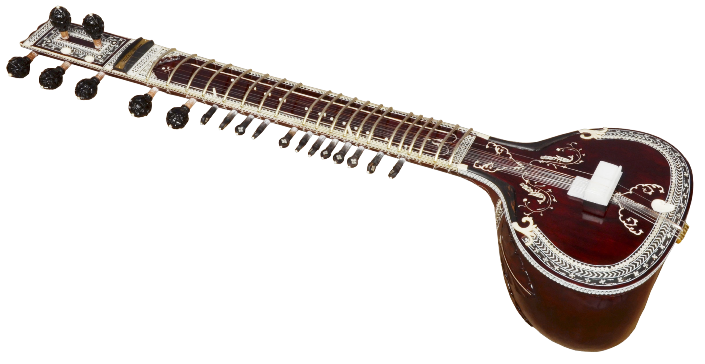
Sitar - The Sitar is a plucked stringed instrument originating from the Indian subcontinent and used in Hindustani classical music. The instrument was invented in the 18th century, and arrived at its present form in 19th-century India.
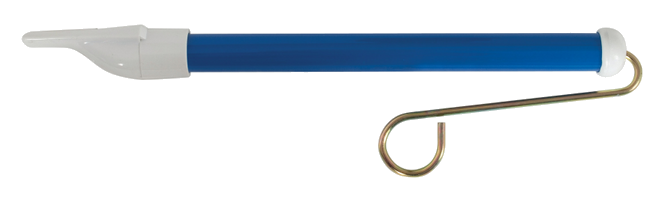
Slide Whistle - A Slide Whistle (variously known as a swanee or swannee whistle, lotus flute, piston flute or jazz flute), is a wind instrument consisting of a tube with a piston in it and a fipple mouthpiece similar to a recorder at one end. This enables the player to vary the pitch with a slide while blowing the whistle, producing an ascending or descending glissando. Because the air column is cylindrical and open at one end and closed at the other, it overblows the third harmonic.
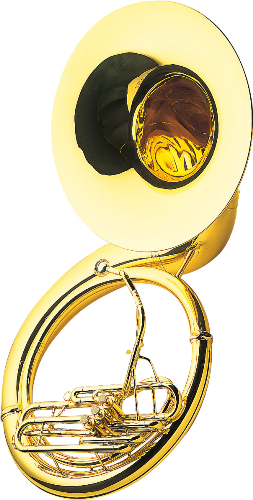
Sousaphone - The Sousaphone is a brass musical instrument in the tuba family. It was first created around 1893 by J. W. Pepper as a modification of the helicon, at the direction of American bandleader John Philip Sousa, after whom the instrument was named. Sousa intended the bass sound of his helicons to better project above the heads of the band, and into the auditorium. Like the tuba, sound is produced by moving air past the lips, causing them to vibrate or "buzz" into a large cupped mouthpiece. Like the helicon, the modern instrument is bent in a circle to fit around the body of the musician, and ends in a large, flaring bell that is pointed forward, projecting the sound ahead of the player. Because of the ease of carrying and the direction of sound, it is widely employed in marching bands, as well as various other musical genres. Sousaphones were originally made of brass. Beginning in the mid-20th century, some sousaphones have also been made of lighter materials, such as fiberglass and plastic

Spinet - A Spinet is a smaller type of harpsichord or other keyboard instrument, such as a piano or organ. The Spinet Piano (shown below), manufactured from the 1930s until recent times, was the culmination of a trend among manufacturers to make pianos smaller and cheaper. It served the purpose of making pianos available for a low price, for owners who had little space for a piano. Many spinet pianos still exist today, left over from their period of manufacture.

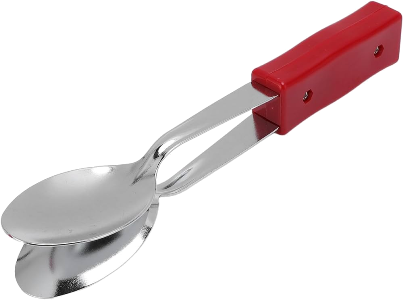
Spoons - Spoons can be played as a makeshift percussion instrument, or more specifically, an idiophone related to the castanets. They are played by hitting one spoon against the other.
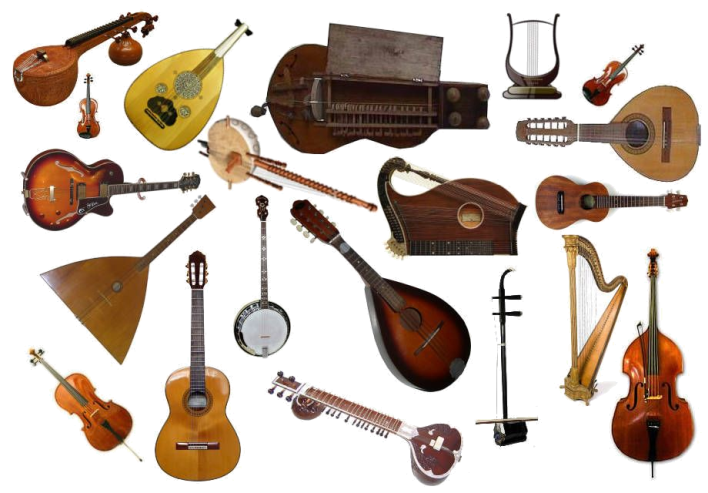
String instruments - String Instruments or chordophones, are musical instruments that produce sound from vibrating strings when a performer strums, plucks, strikes or sounds the strings in varying manners. Musicians play some string instruments, like guitars, by plucking the strings with their fingers or a plectrum (guitar pick), and others by hitting the strings with a light wooden hammer or by rubbing the strings with a bow, like violins. In some keyboard instruments, such as the Harpsichord, the musician presses a key that plucks the string. Other musical instruments generate sound by striking the string. With bowed instruments, the player pulls a rosined horsehair bow across the strings, causing them to vibrate. With a hurdy-gurdy, the musician cranks a wheel whose rosined edge touches the strings.
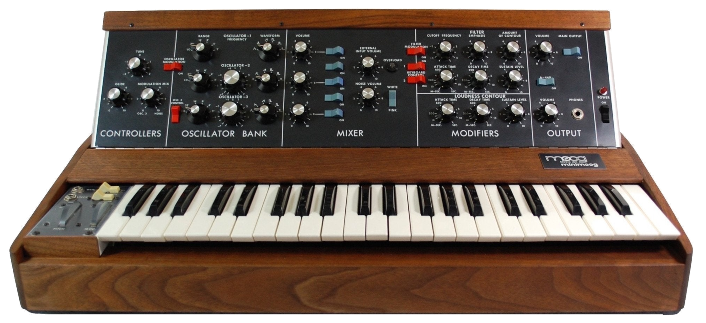
Synthesizer - A Synthesizer (also Synthesiser or Synth) is an electronic musical instrument that generates audio signals. Synthesizers typically create sounds by generating waveforms through methods including subtractive synthesis, additive synthesis, and frequency modulation synthesis. These sounds may be altered by components such as filters, which cut or boost frequencies; envelopes, which control articulation, or how notes begin and end; and low-frequency oscillators, which modulate parameters such as pitch, volume, or filter characteristics affecting timbre. Synthesizers are typically played with keyboards or controlled by sequencers, software or other instruments, and can be synchronized to other equipment via MIDI. The Mini Moog model 400D synthesizer shown below.
|